Oman
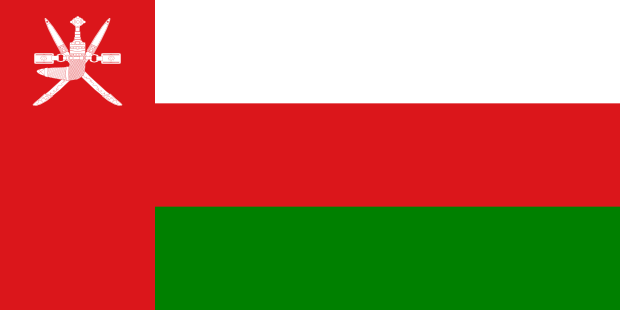
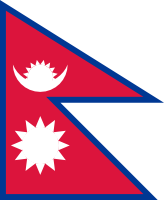
Country flag available in this resolutions
| Icon 32x16 |  |
| Icon x |  |
Oman
Oman: A Jewel of the Arabian Peninsula
Oman, officially the Sultanate of Oman, is a captivating nation located on the southeastern coast of the Arabian Peninsula. Bordered by the United Arab Emirates to the northwest, Saudi Arabia to the west, and Yemen to the southwest, Oman also boasts a long coastline along the Arabian Sea to its south and east, and the Gulf of Oman to its northeast. This strategic position has historically made it a crucial maritime hub and a crossroads of trade and culture. The country’s diverse geography is a striking feature, ranging from the rugged, mountainous spine of the Hajar Mountains, which dominate the northern part of the country, to vast, arid deserts like the Rub al Khali (Empty Quarter) in the west and south. The coastline is equally varied, featuring dramatic cliffs, sandy beaches, and vital mangrove ecosystems. Oman’s climate is predominantly hot and arid, with significant temperature variations between coastal and interior regions, and a distinct monsoon season, the *khareef*, that brings much-needed rain to the southern Dhofar region, transforming its landscape into a surprisingly verdant paradise. The capital city, Muscat, is a vibrant metropolis where ancient traditions blend seamlessly with modern development, characterized by its distinctive low-rise architecture, bustling souqs, and impressive forts.
The demographic landscape of Oman is a fascinating tapestry woven from a long history of trade and migration. While Omanis form the majority of the population, the country hosts a significant expatriate community, primarily drawn from South Asia (India, Pakistan, Bangladesh), Southeast Asia, and other Arab nations. This influx of foreign workers is crucial to Oman’s economy, contributing to various sectors from construction to skilled professions. The Omani population itself is predominantly Arab, with a strong sense of national identity and cultural heritage. The official language is Arabic, though English is widely spoken in business and tourism circles. The vast majority of Omanis are Muslim, with the Ibadi sect being the dominant form of Islam, known for its moderate and tolerant approach. This religious homogeneity has contributed to a generally peaceful and harmonious society. The population is relatively young, with a substantial proportion of individuals under the age of 25, presenting both opportunities and challenges for the future. Urbanization is on the rise, with a significant portion of the population residing in Muscat and other major cities, though traditional lifestyles persist in rural areas and mountainous regions. The Omani government places a strong emphasis on education and healthcare, leading to improvements in literacy rates and life expectancy.
Economically, Oman has undergone a remarkable transformation over the past few decades, moving from a primarily agrarian and fishing-based economy to one that is increasingly diversified. Historically, the nation’s wealth was built on its strategic location for trade, particularly in frankincense and spices. However, the discovery and exploitation of oil and natural gas reserves in the latter half of the 20th century propelled Oman into a new era of prosperity. Oil and gas remain the backbone of the Omani economy, accounting for a substantial portion of its export earnings and government revenue. Yet, recognizing the finite nature of these resources and the global shift towards renewable energy, the Omani government has been actively pursuing a strategy of economic diversification, encapsulated in its Oman Vision 2040 plan. This ambitious initiative aims to reduce the reliance on hydrocarbons by fostering growth in sectors such as tourism, logistics, manufacturing, fisheries, and mining. Significant investments are being made in infrastructure, including ports, airports, and industrial zones, to attract foreign investment and create new employment opportunities for its citizens. The tourism sector, in particular, holds immense potential, with Oman’s stunning natural beauty, rich history, and unique cultural heritage offering a compelling draw for international visitors. The country is also developing its renewable energy capabilities, with a focus on solar and wind power.
The history of Oman is as rich and layered as its landscapes. Archaeological evidence suggests human settlement in the region dating back thousands of years. Its strategic coastal location made it a vital center for seafaring trade routes connecting Mesopotamia, India, and East Africa. The country rose to prominence as a maritime power, with Omani fleets exploring and trading across the Indian Ocean. During the 16th century, Oman played a significant role in resisting Portuguese colonial ambitions in the region, famously expelling them from Muscat in 1650. The Al Said dynasty, which has ruled Oman since the mid-18th century, established a powerful empire that extended its influence as far as Zanzibar. The 19th century saw Oman’s influence gradually wane due to internal strife and the rise of European colonial powers, leading to a period of relative isolation. However, under the visionary leadership of Sultan Qaboos bin Said Al Said, who ascended to the throne in 1970, Oman embarked on a path of modernization and development. Sultan Qaboos implemented sweeping reforms, investing heavily in education, healthcare, infrastructure, and the economy, while carefully preserving the country’s cultural identity and traditions. His reign was characterized by a policy of neutrality and non-interference in the affairs of other nations, earning Oman a reputation as a trusted mediator in regional disputes. Following Sultan Qaboos’s passing in 2020, his cousin, Sultan Haitham bin Tariq Al Said, assumed leadership, continuing the nation’s trajectory of progress and development while upholding the principles of peace and stability. Oman’s history is a testament to its resilience, its strategic importance, and its enduring cultural heritage, making it a truly unique and fascinating nation on the world stage.
Information about country Oman
Automated text translation, excuse errors, please!
Informations are from the publication CIA The World Factbook.
Country Oman is situated in a location / continent Middle East. Oman has an area of 309 500 km2 and 3 090 150 residents. The highest point has a height 2 980 above sea level. and it is called Jabal Shams. The lowest point is located at the level of 0 above sea level and it is named Arabian Sea. System of government is Monarch.The capital city is Muscat. Oman has the international abbreviation MU.
Oman - economy
Total gross domestic product (GDP) is 82 820 000 000 $. Total gross domestic product per capita in purchasing power parity is 26 900 $. GDP grows by 5.50 % a year. Inflation (consumer price index) is equal to 4.10 % a year. Oman have 968 800 working-age population (from a total population 3 090 150 people). Unemployment is at 15.00 %. Oman issued 3.00 % GDP to healt care and 11,40 % GDP to army. The public debt of the country is 4.10 % GDP. The total amount of foreign debt is 9 054 000 000 USD.
Oman - transport and telecommunications
Oman has 53 430 km of roads and 130 airports. There is registered 5 ships.
Number of active mobile phones (sim card) in the country Oman is 4 809 000. Number of active fixed telephone lines is 287 600. Oman has 1 465 000 internet users, who have the available 13 488 Internet connections. Oman has been assigned a domain first Choose range .om.
Oman - demography
As suggested above, Oman has 3 090 150 people. Population growth is in the amount 2.04 % per year. Number of children born per 1000 population per year is 24.33.Every mother has average 2.87 children. The infant mortality rate is 14.95 and maternal mortality 32.00 deaths per 100,000 births. Average estimated life expectancy makes 74.47 years. Mortality is 3.42 people per 1000 population per year.
Oman - energetics
Oman consumes a year 15 340 000 000 kWh of electricity. Annual electricity production is 18 590 000 000 kWh in power plants with a total installed electrical capacity 4 202 000 kW. Oman exports 0 kWh and imports 0 kWh of electricity per year Energy mix of power generation is as follows: fossil fuels: 100 %, nuclear energy: 0 %, renewable: 0.0 %, hydropower: 0.0 %. The country Oman is harvested annually 890 500 barrels of oil.
Dále doporučujeme:
Odkazy na užitečné webové stránkyNaše tipy na užitečné weby
Zajímavé webové stránky
Odkazy nejen na naše partnerské weby
Odkazy na zajímavé weby
Flags of countries
World flags
World countries flags
 |
 |
 |
 |
 |
 |
 |
 |
 |
 |
 |
 |
 |
 |
 |
 |
 |
 |